Billy wallson
Senior DirectorA tiny daily clean-up ritual can do more for your mental space than a marathon organizing session.
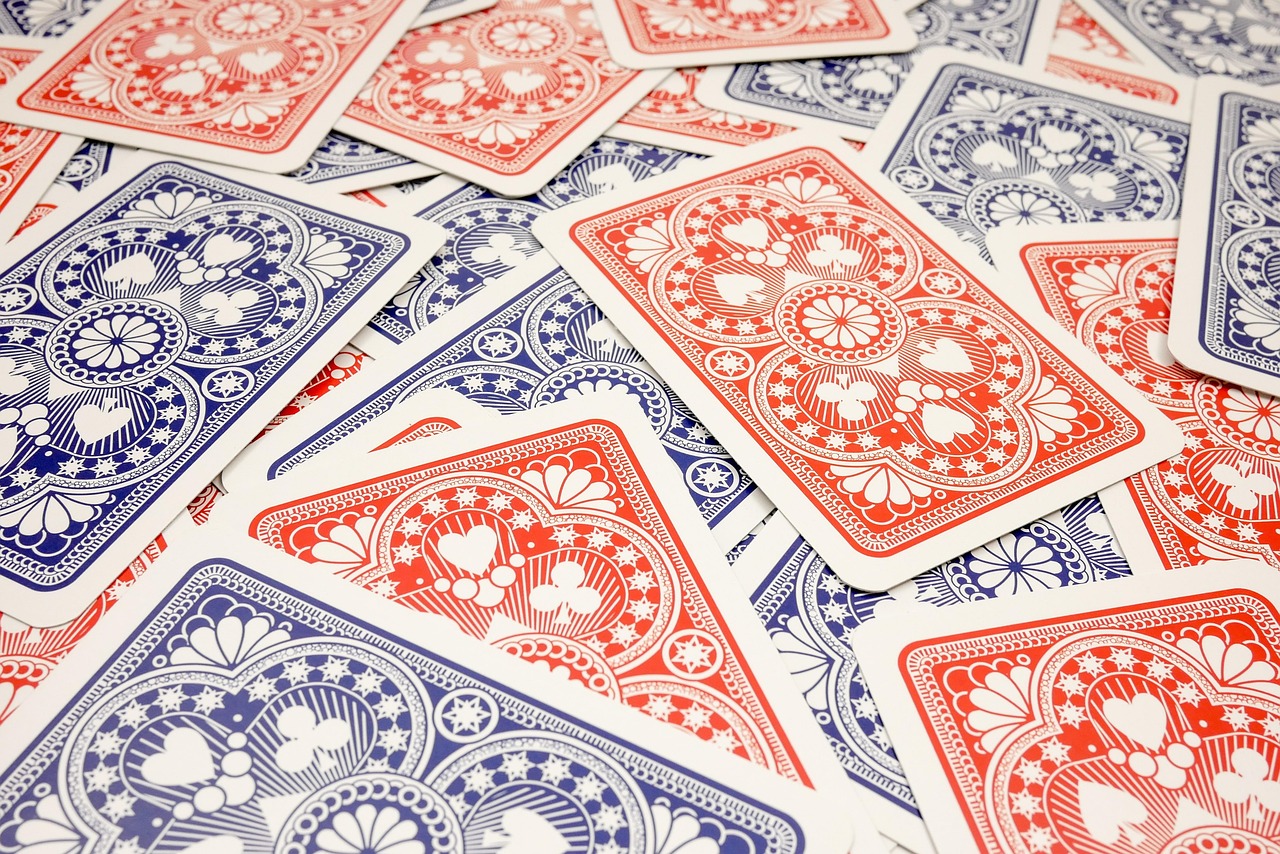
Ask ten gamblers where the smart money goes and you'll get ten confident answers. The slots player swears by a machine that's "due." The poker grinder rolls his eyes and talks about game selection. The sports bettor is somewhere in the corner, muttering about closing line value. Here's the uncomfortable truth: these three worlds don't just have different rules — they reward completely different skills, bankrolls, and temperaments. If you don't know which one actually fits you, you're not gambling. You're donating.
Every form of iGaming runs on a built-in advantage for the operator. The question is how big that advantage is, and whether you can do anything about it.
For decades, casino operators leaned on this single business fact: they didn't need to cheat, just to exist. The math pays their bills. That's why the "due for a payout" myth refuses to die — confirmation bias keeps feeding it. Reel probability for most video slots has no memory whatsoever. Play a slot for ten thousand spins on a 96% RTP title and your expected return is still 96% on every future wager, no matter how cold the graph looks.
This is the crux of it. In slots, blackjack, roulette, and sports betting, your opponent is the house — and the house cannot lose over time. In poker, your opponent is another human being. The house just takes a cut and steps aside. That single structural difference is why every professional gambler worth a damn gravitates to either poker or sports betting, and almost never to slots.
It also means the money flows differently. One poker player's winnings are another's losses; no new money enters the ecosystem unless recreational players deposit. This is why game selection is more important than card skills. Sitting at a table full of regs and grinding out 1BB/100 hands at 10 buy-ins is technically winning, but it's a catastrophic use of your time compared to finding a soft $1/$2 table on a Friday night.
A concrete illustration: a strong player at six-max $200NL might average 5 BB/100. At 80 hands per hour, that's roughly $8/hour before rakeback. The same player at a juicy live $2/$5 table filled with tourists can realistically pull 15-20 BB/100. Same skillset. Completely different hourly.
Modern sports betting looks more and more like financial trading, and serious bettors treat it that way. Odds move based on sharp money, injury news, public sentiment, and — critically — line shopping. A bettor who always takes the best available number across ten books can outperform someone with better predictive instincts but only one account.
Consider this real, practical example. Two bettors both think the Chiefs win. Bettor A grabs -3 (-110) at one book. Bettor B waits and grabs -2.5 (-110) elsewhere. Over hundreds of bets, that half-point consistently converts pushes into wins, and the edge compounds. This is why profitable sports bettors obsess over closing line value — whether their bet beat the final line before kickoff. If it did consistently, they're sharp, even when a given week goes red.
There's also a habit shift that separates winners from losers. Pros typically: If this is new to you, สล็อตเว็บตรง is a sensible next read.
It would be lazy to write off slots entirely. Mechanics like megaways, hold-and-win, and enhanced bonus features do change payout dynamics, even if expected value stays under 100% for the player. Studios like Pragmatic Play, Nolimit City, Push Gaming, and Hacksaw Gaming publish their RTP and max-win caps, and regulated markets like the UK, Malta, and Sweden force public verification. Compare a 96.5% RTP Hacksaw title to an unverified offshore one — the gap is often worth several percentage points, and that gap is essentially a permanent tax on your play.
If you're going to play slots, do it consciously: pick the highest-RTP version of a game you can verify, exploit welcome bonuses and free spins with wagering requirements you've actually read, and treat the session as entertainment with a fixed cost. That's the honest framing. Nobody has a system that beats mathematical RTP; people who claim otherwise are either selling a course or gambling somewhere more dangerous than the casino.
Match the game to your actual profile, not your aspirational one. Ask honestly:
None of this is meant to romanticize any one game. Online slots reliably deliver a 96%+ return on every spin with zero learning curve, and for a player who wants a night of predictable-odds entertainment, that's arguably a good deal. Poker and sports betting, conversely, are genuinely beatable — but only if you're willing to grind, track, and possibly lose more in the learning phase than you win for months.
The industry's marketing wants to blur these distinctions, because confusion benefits the operator. A slot player who thinks he's a poker-level grinder will deposit forever. The real skill in iGaming isn't learning to beat a particular game — it's learning honestly which game can beat you, and staying where you actually hold the edge.
The sink is an underrated meditation hall, and the sponge is your teacher.

Instead of listing things you're grateful for, try holding one small object that reminds you without words.
What if the point of a hobby was never to become impressive?

You do not need a ten-mile hike or a meditation app to make a walk feel meaningful.

A tiny daily clean-up ritual can do more for your mental space than a marathon organizing session.

The sink is an underrated meditation hall, and the sponge is your teacher.

Copyright © 2026 Skipping Stone Blog. All Rights Reserved.




Roseanne Williams
Sep 23, 2026 ReplyWhen the day starts spinning too fast, three slow breaths can hand you back the reins.